
Black Germans during World War I
1914–1918 · Community, colonial war and contested belonging
Black German history did not begin in 1945. By 1914, Africans and people of African descent were already living, studying, working and building relationships in Germany. This guide distinguishes life in Germany from the experiences of African soldiers and civilians in Germany’s colonial empire.
Black lives in wartime Germany
War interrupted migration and left some Black visitors unable to leave Germany. After Germany lost its colonies, former colonial subjects faced further obstacles to travel and citizenship. These circumstances helped shape the small communities that developed in the Weimar Republic. “Black Germans” is used here as a historical and community description, not a claim that every person held German citizenship. [1, 2]
The war in Africa
The conflict extended across German colonies, including Togo, Cameroon, Southwest Africa and East Africa. African soldiers, carriers and civilians bore its burdens; Allied victory redistributed colonial territories rather than ending colonial rule. [3]
Michelle R. Moyd’s Violent Intermediaries explains how askari participated in making the German East African colonial state while pursuing social standing and livelihoods. It provides essential background to the army that fought during World War I and challenges celebratory stories of unquestioning loyalty. African service under German command must not be mistaken for equal citizenship or a single political allegiance. [4]
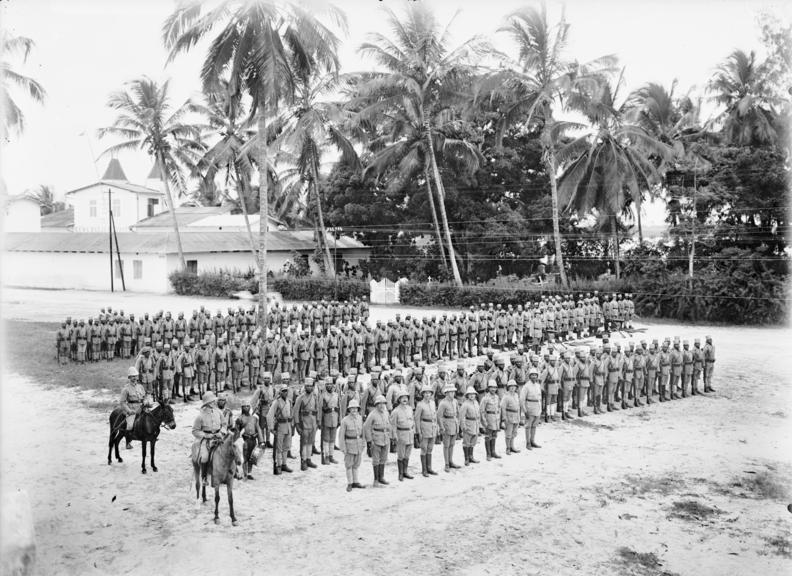
Credit: Bundesarchiv, Bild 105-DOA3056 / Walther Dobbertin / CC BY-SA 3.0 Germany. Image reproduced as supplied, without additional cropping.
After 1918: the Rhineland
The Allied occupation brought French colonial troops to the Rhineland after the war. Children born to local women and occupation soldiers later became targets of Nazi persecution. They belong to a different generation from the Black German children born after World War II whose histories include adoption abroad. [1]
Books in the BGHRA reading list
- Robbie Aitken and Eve Rosenhaft, Black Germany (2013) — community history across both periods.
- Michelle R. Moyd, Violent Intermediaries (2014) — African military and colonial context.
- BGHRA Books & Reading — explore the wider collection.
Cited sources and further reading
- United States Holocaust Memorial Museum, “The Nazi Persecution of Black People in Germany”, especially the sections on origins before World War I and the Weimar period.
- Robbie Aitken and Eve Rosenhaft, Black Germany: The Making and Unmaking of a Diaspora Community, 1884–1960 (Cambridge University Press, 2013). Publisher record.
- Brian Digre, “Colonial Warfare and Occupation (Africa)”, 1914-1918-online, version 2.0, 7 July 2017.
- Michelle R. Moyd, Violent Intermediaries: African Soldiers, Conquest, and Everyday Colonialism in German East Africa (Ohio University Press, 2014). Publisher record.
Related: Black Germans during the Nazi Period · Germany and Namibia.